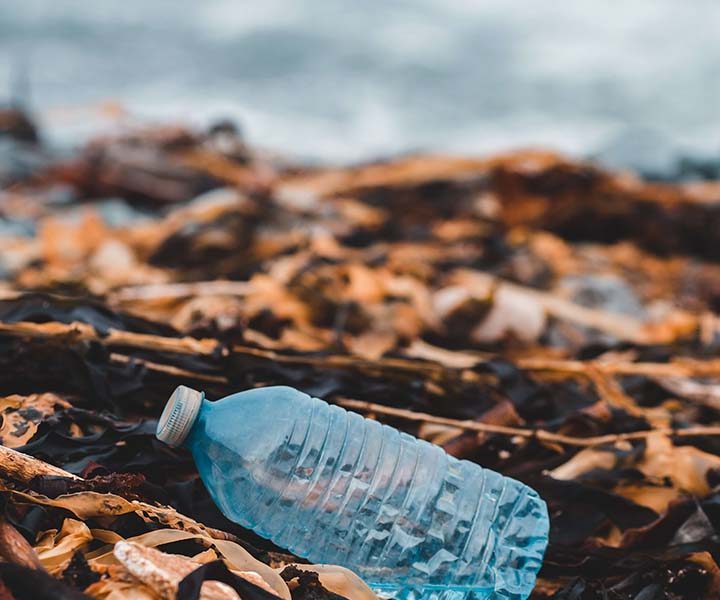
Alternative Plastics Plastic is everywhere in our daily lives: the straw for our morning iced coffee, the baggie our sandwich goes in, and the pens and pencils we use. Obviously, excessively using plastic will not be good for the planet in the long run. It’s a fact that plastics take forever to degrade, some up to 1000 years. Therefore, it’s important for scientists to come up with alternate plastics for us to use in our daily lives. In recent years, many companies and scientific communities around the world have begun to develop such plastics in creative ways. For example, some solutions include using everyday items such as corn starch to form plastics. In this case, if the plastic somehow is improperly disposed of and goes into the ocean, it can degrade quickly and be ingested by marine life. Another solution that is being tested out right now is a basic general chemistry knowledge: make the plastic soluble in water or common liquids, and dissolve into natural liquids and gasses such as CO2 and H2O. In fact, a California company named Newlight Technologies has found a way to hit two birds with one stone. They have created a technology called AirCarbon, which uses methane and carbon dioxide gas to make their AirCarbon plastic. They claim that eventually they can extract some of those gasses from the ocean, and make eco-friendly plastic while helping to reduce climate change in a rather unorthodox way. Scientists are always looking for ways to be more efficient, and if Newlight Technologies can do what they’re claiming on a large scale, they may have stumbled on one of the greatest inventions in modern history. The bottom line is, our current plastics will eventually need to be replaced by a planet-friendly material, while still maintaining its unique characteristics.
Iyengar, Rishi. “This Company Thinks Its Plastic Alternative Can Help Solve Climate Change.” CNN, Cable News Network, 19 Oct. 2020, www.cnn.com/2020/10/19/tech/plastic-dissolving-newlight-aircarbon-climate/index.html.
UN Environment. “Back to the Future as Innovators Seek Plastic Alternatives.” UN Environment, 28 Nov. 2018, www.unenvironment.org/news-and-stories/story/back-future-innovators-seek-plastic-alternatives.
Photo by Erik Mclean on Unsplash