As life returns to normal, leaders of companies across the world are facing one question: whether to allow workers to continue working at home or come back to the office. Throughout the pandemic, we have seen many articles citing studies that show productivity is consistently up at home and that companies are better off allowing workers to stay home. But more recently, there are additional signs that signal Zoom calls and a virtual workplace could hamper creativity and negatively affect the company. In this episode of 90SS, we will discuss both arguments for virtual workplaces. To start, productivity is calculated by taking the amount of money that a company earns and dividing it by the number of hours people put in to work. Proponents of working at home argue that in addition to a stress free commute, added flexibility, and increased time with family, working from home also increases worker’s focus. The Washington Post interviewed Dr. Nicholas Bloom, William D. Eberle Professor of Economics, at Stanford University, whose studies concluded that working from home can increase productivity from 3-5%. But the Washington Post also published an op-ed arguing against working from home, saying that many of these studies have data that is broad and difficult to interpret. Another argument against remote work is that people are unable to make friends and have face-to-face communication, which can be damaging in the long term. Likely, the answer lies somewhere in between the two arguments. Since each person learns and works differently, it’s very difficult to put a broad perspective on which way people will be more productive. It might be best for a company to try a hybrid method and adjust accordingly based on their workers’ feedback as well as their own data.



More from this show

Recently, the United States Senate passed a bill that would keep Daylight Savings Time (DST) permanent starting from 2023. Often, the order...

Hi everyone, welcome back to 90 Second STEM, I’m Michael Tung, I will be your host for the last episode of 2021. Before we get started I...
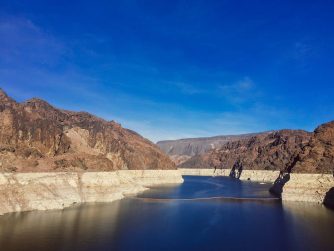
Lake Mead sits on the Nevada, Arizona border, and it provides 25 million people access to drinking water up and down the West Coast of the...